
Looking for Splinters of Light
The line between sacred and secular is sometimes blurry.

After posting last week’s essay, I have continued to wrestle with some questions. Is SINNERS really anti-christian? What is it that makes a film, or any story, anti-christian? For that matter, what makes a story “Christian”? Parsing the blurred lines between the sacred and the secular is part of the reason I started writing these essays, so, here goes …
It’s probably cliche to lean on Tolkien, so if the mention of his name triggers an eye roll, I get it. “We have come from God,” he said,1 “and inevitably the myths woven by us, though they contain error, will also reflect a splintered fragment of the true light, the eternal truth that is with God.” Whenever I watch a film or read a novel, I like to look for the splinters.
I picked up the habit early in college when I was assigned to read the Bhagavad Gita. The passages that mirrored or closely aligned with scripture caught my attention. This was before I read a single page of either Tolkien or Lewis, and my interest in “splintered fragments” only grew after I had. A talk from writer Jeffrey Overstreet at the 2010 Reel Spirituality conference pushed me even further. In that talk, he briefly discusses filmmaker Guillermo del Toro’s decision to make THE LABYRINTH OF THE FAUN2 after turning down the opportunity to direct Disney’s first chapter of THE CHRONICLES OF NARNIA.
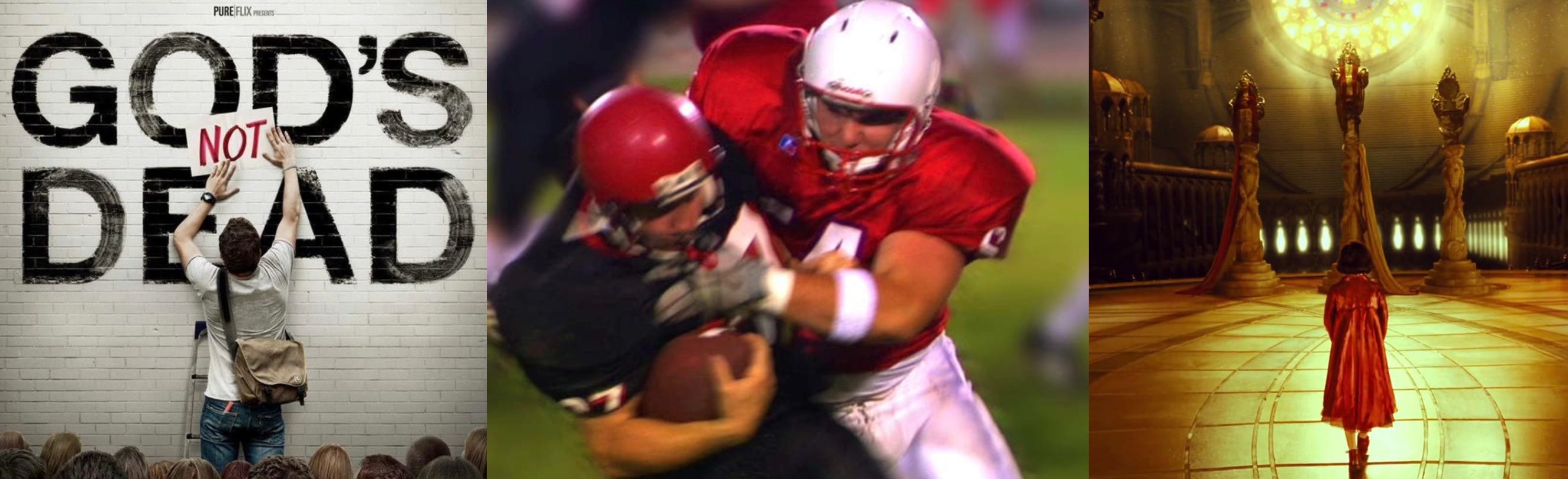
Del Toro, a lapsed Catholic, had no interest in making what amounted to a reimagining of the Christ story. He preferred the pagan myths that fired his young imagination. So he developed a dark fairy tale about a little girl caught amid the struggles of 1944 Francoist Spain. As Overstreet summarizes it:
The kind of story where there’s a girl who has a sense that she belongs to a higher, more glorious kingdom. The kind of fairy tale where she lays down her life to save someone. The kind of fairy tale where, when she enters the heavenly kingdom at the end and approaches the throne, the king spreads open his arms and all but says, “Well done, good and faithful servant.” Well done, del Toro. You showed us. Ran so hard and fast from the Gospel he ran smack into it.3
Overstreet’s talk burrowed its way into my head and set up camp. If you watch the whole thing (and I hope you do), you’ll find I have internalized much of it, and little fragments of it continue to find their way into my writing. I have since found and learned to enjoy a number of stories that appear to run hard and fast away from the Gospel only to find their way back to it. Can we call these stories “Christian”? Honestly … I don’t know. Probably not. But then, labels like “Christian” or “anti-Christian,” sacred or secular, while they have appropriate use, sometimes sharpen lines that should probably stay blurred.
So, when it comes to something like SINNERS, I look for the splinters that cross the blurred lines. The film is fluent in the language of Christianity, but the puzzle is how it uses the language. It criticizes malignant use of Christian narratives, but is it actively trying to undermine Christianity? I lean toward no. But I will admit some bias here—sometimes I focus so hard on the splinters that I can miss the harmful narrative threads.
I can also get pretty wound up about the stories that swing the opposite way. The evangelical marketplace tends to produce a narrow slate of films that xerox an unambiguous worldview—follow these steps, pray these prayers, avoid these habits, and victory in Jesus will find you. Dallas Willard called this “the gospel of sin management.” It bears resemblance to what Dietrich Bonhoeffer called “cheap grace.” So when I see films produced by the evangelical content generator, I tend to find them more anti-christian than not.
When FACING THE GIANTS was first released 2006—informally launching a new era of evangelical filmmaking—most of the people in my orbit could only sing its praises. I kept quiet at the time. I didn’t want to sound like an overly critical malcontent, but I hated the movie. A story in which a struggling football coach prays his way to winning season (and a new truck) reconfigures its sense of reality more than re-enchanting it. It has more in common with pagan divination than actual faith.
GOD’S NOT DEAD, released in 2014, gave us the story of a college freshman, a Christian, who engages his atheist professor to a series of debates about the existence of God. The professor—a caricature of evil so cartoonish he should have a mustache to twirl—of course finds Jesus in the end, but only after getting hit by a car. And wouldn’t you know it, the freshman’s pastor is there to pray over the poor sap. The film, in short, is a blatant piece of propaganda meant to marginalize anyone outside its myopic vision of faith.
I know many people find these movies affirming. GOD’S NOT DEAD in particular was released in a polarized culture, and divisions have only deepened since. We need, from time to time, to be reminded of the truth. Time and again, the writings of the prophets press us to remember, remember, remember. We are prone to leave the God we love.
We also like our echo chambers—narratives that comfort and affirm our biases. Both of these films utilize fluent knowledge of Christian narratives to reinforce their prejudices. They reflect common beliefs about the Gospel rather than reflecting the actual Gospel. Stories shape our moral imagination, probably more than we would like to admit. Storytellers have enormous power to exploit this fact, which means the moral anchors of the stories we tell matters. Take a moment to read Becca Rothfeld’s piece in Art in America comparing Christian films to fascist aesthetics. It might be contentious to compare something like GOD’S NOT DEAD to the propaganda machine responsible for the Holocaust, but consider where the Venn diagram overlaps: they both tell lies.
I don’t mean they tell lies because they’re fake. All stories are fake—make believe can still say true things. Any good story will tell the truth about the common human experience. GOD’S NOT DEAD and other films like it not only fail in this regard, they blatantly resist it. They package a tract in a warm, friendly movie that’s safe for the whole family, forgetting that God never promised he was safe.
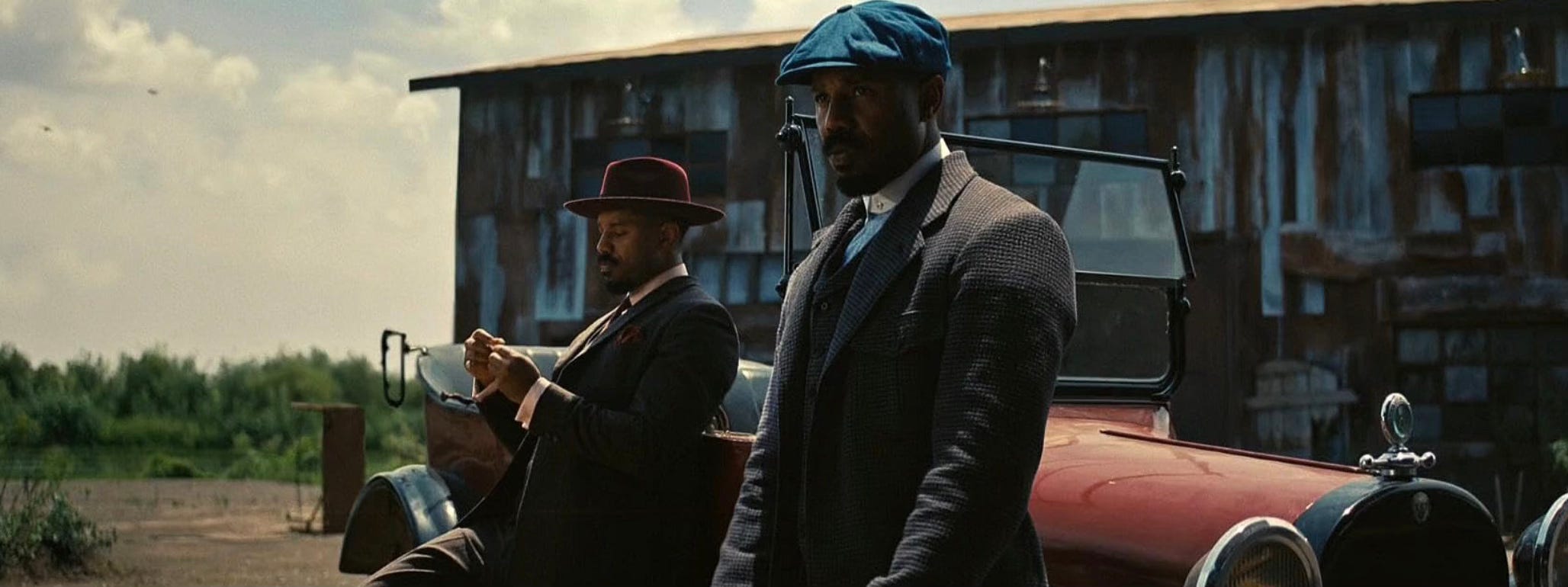
So what do we do with something like SINNERS? The film would max out the typical evangelical content warnings: language, violence, explicit sexual content, even pagan ritual. There’s plenty of room to feel like it leans into anti-christian narratives. But is it lying? Even if it is spinning an anti-christian narrative, I would argue it’s trying to tell the truth.
There’s a school of thought that would say films like GOD’S NOT DEAD or FACING THE GIANTS are also trying to tell the truth, but I disagree. SINNERS has a point of view. It may be anti-christian, it may even wish to undermine common virtues. It also tells the truth about racism, oppression, appropriation, and the consequences of sin. GOD’S NOT DEAD, by contrast, is unabashedly ideological, using a pro-christian narrative to reshape the realities of faith.
Writer Nicholas McDonald posted an article last month that does a wonderful job summarizing what he calls the “toxic errors” of evangelical film culture. (And he does it with a sense of humor I have trouble emulating and have long sense quit trying.) It’s worth the read—he identifies the problem better than I have here.
Faith in storytelling, like anyone’s personal beliefs, assumes a more innate and integrated posture. On that point, McDonald’s article caught the attention of Orson Scott Card (author of my favorite novel). I won’t quote his comment in full, but I like how he puts it:
Theme-driven stories can only be about what you believe that you believe. Natural stories confess on every page the things that you believe so deeply that it has never occurred to you that the world may be otherwise. These are not opinions, they are knowledge, but of truth that you know so deeply that you act on it without noticing.
In short, if you want to write a Christian story, BE a Christian, and then tell honest heartfelt stories. Whether or not Christ or religion are ever mentioned at all, you will confess your faith with every unconscious choice you make while inventing the story. You will be incapable of writing a non-Christian story.
The well-told story will reflect the character of the author. It can’t be helped. It will also reflect at least a splinter of the Gospel’s light, even if it’s by accident.
Final Thoughts (or Caveats?)
I am by no means perfect in my analysis. Much of my writing here is an exercise in critical development. This essay, like all others, is me fumbling for a way to respond to the world around me. I am going to get it wrong sometimes. Everything I have written here is a snapshot in time—tomorrow might inspire me to reconsider some things.
Personal discernment should of course be taken into consideration. There are, I’m sure, those who watch something like GOD’S NOT DEAD or FACING THE GIANTS because they genuinely enjoy them. Maybe they need the safety of the content. If it edifies them and draws them closer to Christ, great. The content of some films may trigger or offend them in ways that should not be criticized. My lens should not set the standard.
Tolkien never actually said this word for word; it’s a paraphrase pulled from:
Carpenter, Humphrey. J.R.R. Tolkien: A Biography. Houghton Mifflin, 1977.
While known in the U.S. as PAN’S LABYRINTH, the film’s original title is EL LABERINTO DEL FAUNO, which translates to English as THE LABYRINTH OF THE FAUN. Which is a better title, seeing as how the film has nothing to do with the Greek god Pan.
This quote occurs about 13 minutes into Jeffrey Overstreet’s talk.